
To learn How To Craft A Perfect Korean BBQ Ssam, one must prioritize the meticulous construction of a single-bite package for an optimal eating experience. This involves precise assembly of foundational components and careful selection of ingredients, ensuring both structural integrity and a harmonious flavor profile.
Key Implications:
- Optimal Ssam Construction: Crafting a perfect ssam prioritizes a single-bite size through precise layering of four core components—leaf, rice, meat, and ssamjang—to ensure a balanced and harmonious mouthful.
- Ingredient Selection: Achieving ideal ssam texture and structural integrity necessitates careful choices for wraps, favoring pliable red or green leaf lettuce, and complementary banchan that enhance rather than overpower primary flavors.
- Ssamjang’s Essential Role: As a cornerstone condiment, ssamjang provides the indispensable savory, spicy, and umami depth that defines the traditional Korean BBQ ssam flavor, fundamentally enhancing the overall eating pleasure.
Achieving the Optimized One-Bite Ssam Experience
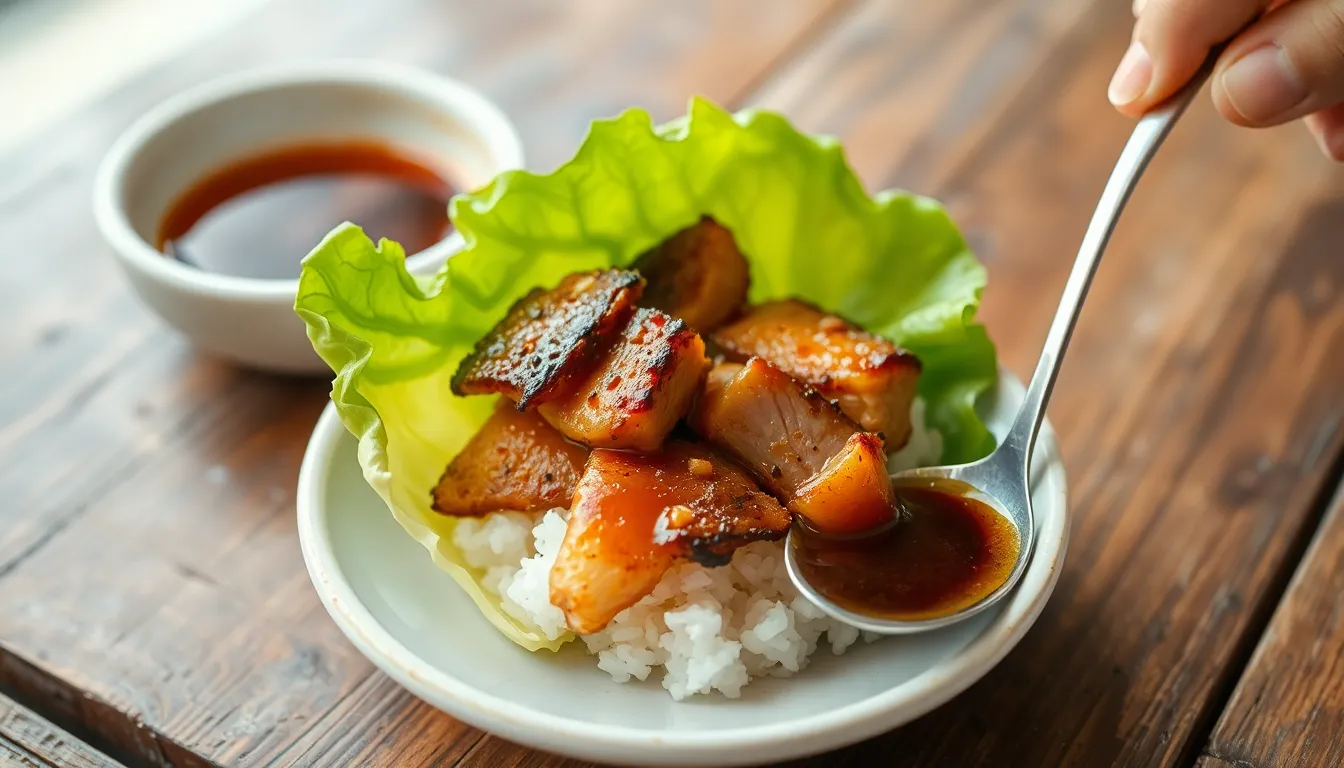
Crafting a traditional Korean BBQ ssam fundamentally prioritizes a single-bite size. This meticulous construction ensures an optimal eating experience, as emphasized by chef Sam Yoo, by combining four core components. Precise assembly and balanced integration are therefore crucial for its success.
The paramount objective for any ssam is creating a compact, manageable package for immediate consumption. Each ssam must be wrapped with care, consumable entirely in a single motion. This necessitates rigorous attention to ingredient proportioning and thoughtful layering.
The Foundational Components of Ssam
The fundamental construction of a ssam dictates a specific layering of ingredients. A classic Korean BBQ ssam invariably includes a fresh lettuce or perilla leaf, a modest portion of rice, a savory piece of grilled meat, and ssamjang (soybean paste). These four elements form the irreducible core, providing essential flavor and textural framework.
Each component plays a critical role in the overall ssam experience. The leaf provides a fresh wrapper, rice offers a neutral base and binding quality, meat supplies the primary protein, and ssamjang delivers crucial umami and spice. This specific combination ensures a harmonious blend within a single mouthful, central to the ssam concept.
Chef Sam Yoo’s Strategic Ssam Assembly
Chef Sam Yoo’s recommended build provides an exemplary and actionable method for combining core components while adhering to the single-bite rule. His typical ssam construction commences with a crisp lettuce leaf, acting as the primary vessel. A carefully selected portion of grilled meat is then placed upon the leaf, establishing the central flavor element.
Following this, Chef Yoo integrates either ssamjang or kimchi as the key condiment. This deliberate choice introduces a specific flavor profile—either the rich, savory depth of ssamjang or the vibrant, fermented tang of kimchi. This strategic inclusion ensures each bite contains a burst of characteristic Korean flavor, crucial for a perfectly constructed ssam.
Importantly, this foundational build allows for further banchan additions, or small side dishes, without compromising the single-bite principle. Common optional enhancements include raw garlic for pungency or additional kimchi for extra fermentation notes. Mastering how to craft a perfect Korean BBQ ssam, through this systematic approach, significantly elevates dining enjoyment.
Ssamjang: The Essence of Traditional Flavor
Ssamjang functions as a rich condiment indispensable for achieving the traditional ssam flavor profile. This essential paste is characteristically derived from fermented soybean paste, often blended with gochujang (Korean chili paste) and other aromatics. Its complex flavor profile, featuring savory, spicy, and umami elements, makes it a cornerstone of Korean cuisine.
The inclusion of ssamjang is critically important for the authentic Korean BBQ ssam experience. It provides depth and a distinctive savory-spicy kick that profoundly complements the grilled meat and fresh vegetables. Therefore, ssamjang is not merely an accompaniment but a fundamental component defining the ssam’s traditional taste and overall eating pleasure, truly enhancing how to craft a perfect Korean BBQ ssam.
Optimizing Ssam Texture and Flavor with Specific Ingredient Choices
Ever wondered how to craft a perfect Korean BBQ ssam that holds together beautifully and bursts with balanced flavors? The secret lies in making meticulous ingredient choices. It’s not just about what you put in, but how each component contributes to the overall experience. Achieving optimal ssam texture and structural integrity truly begins with careful selection of your wrapping leaves and complementary side dishes.
Selecting the Ideal Ssam Wraps
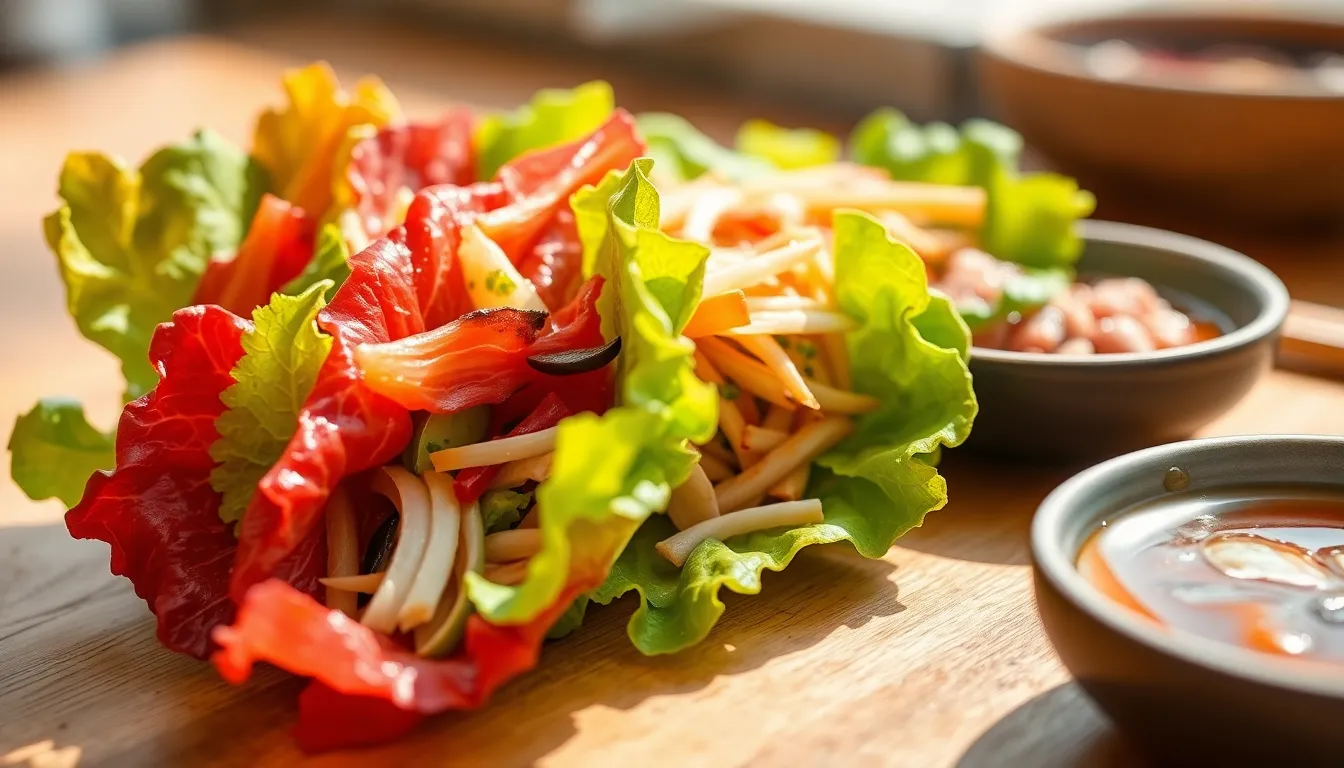
Choosing the right greens for your ssam is perhaps the most critical step in ensuring a delightful bite. For a wrapper that offers both flexibility and a satisfying crunch, red leaf lettuce or green leaf lettuce are your go-to options. Their inherent proper texture provides the perfect balance, allowing you to create a secure wrap without tearing, yet remaining easy to bite through. You want a leaf that can embrace your fillings without losing its integrity, don’t you?
Conversely, some popular lettuce varieties simply don’t make the cut for an optimal ssam experience. Romaine lettuce, for instance, is often considered “too hard,” failing to offer the pliable nature needed for effective wrapping and a pleasant mouthfeel. On the other hand, butter lettuce presents the opposite challenge; it’s described as “too soft,” making it prone to tearing and struggling to contain your delicious fillings. This direct comparison highlights the importance of texture for structural success, proving that not all greens are created equal for your ssam.
Curating Complementary Banchan
Beyond the wrapper, the selection of your side dishes, or banchan, significantly influences the overall flavor profile and balance of your ssam. While many banchan are delicious on their own, not all are suitable companions within a ssam wrap. Think about how each element interacts. For instance, have you considered how a particular banchan’s texture or dominant flavor might impact your ssam?
To avoid jarring flavors or textures, you might want to steer clear of certain banchan. Myeolchi, the small soy candied anchovies, are often discouraged due to their inherently “sharp” taste, which can overpower the delicate flavors of your BBQ meat and ssamjang. Similarly, odeng, or Korean fish cakes, are generally deemed not the best option for inclusion within a ssam. Their texture and subtle flavor might not integrate seamlessly into the wrapped bite, potentially detracting from the harmonious blend you aim for when you craft a perfect Korean BBQ ssam. Exploring diverse Korean culinary trends often reveals new ways to combine flavors, but for ssam, specificity matters.
The Essential Ssamjang
No ssam is complete without ssamjang, the savory dipping sauce that brings all the flavors together. Traditionally, ssamjang is crafted primarily from soybean paste, forming a rich, umami base that perfectly complements grilled meats. This foundational ingredient provides a depth that truly elevates your ssam.
While soybean paste is the cornerstone, ssamjang can also be customized with various additions to enhance its complexity. You’ll often find versions incorporating fresh garlic for a pungent kick, sesame oil for a nutty aroma, and a touch of soy sauce to deepen the savory notes. These variations allow you to fine-tune the sauce to your preference, ensuring every bite of your ssam is as flavorful as it is structurally sound.
Featured image generated using Flux AI
Chowhound: “How To Craft A Perfect Korean BBQ Ssam”